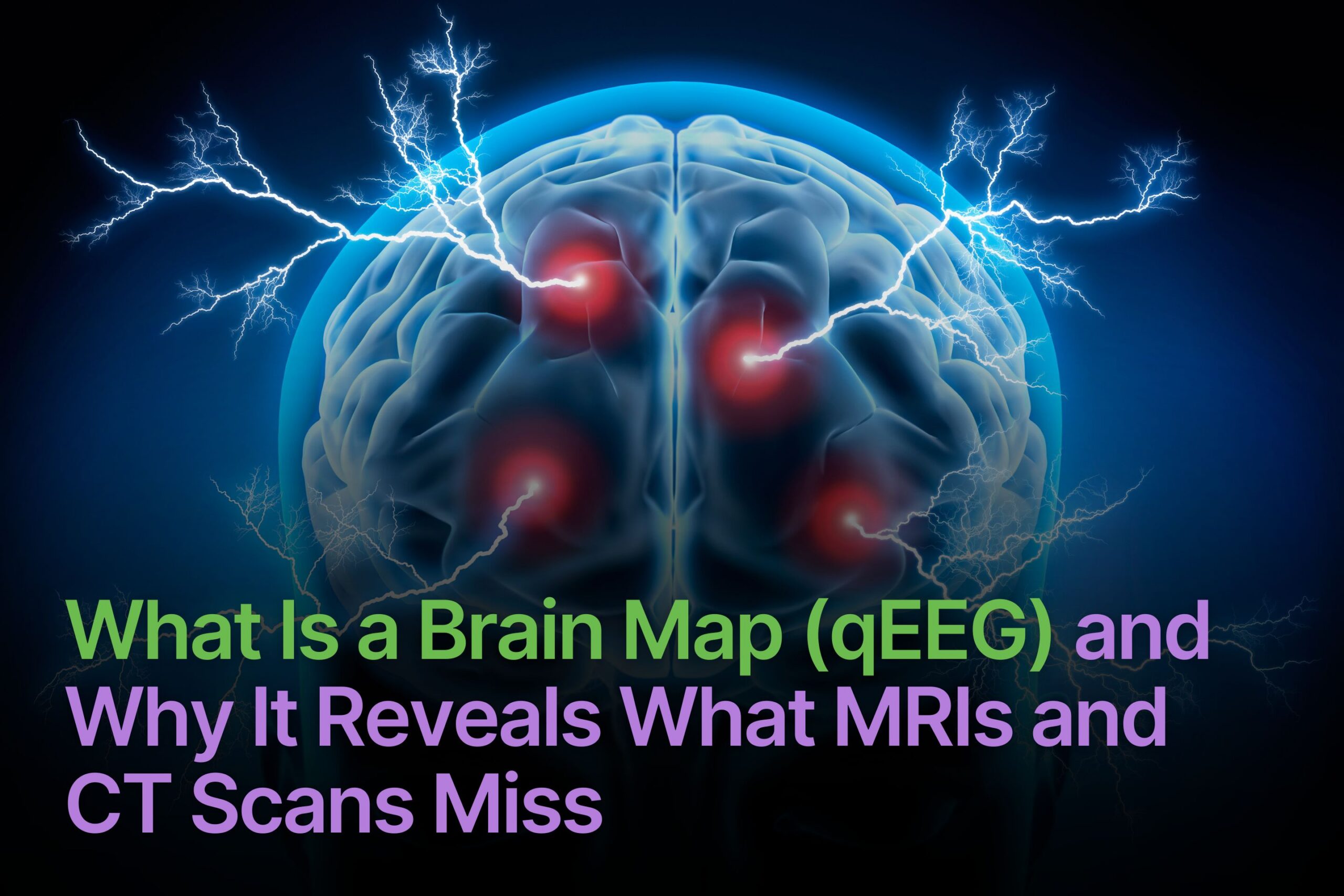

Home » What Is a Brain Map (qEEG) and Why It Reveals What MRIs and CT Scans Miss
Introduction: One Test That Changes Everything
Imagine being able to look inside your brain—not to find physical damage or structural abnormalities, but to see exactly how your brain is functioning in real time. To know which regions are overworking, which are underperforming, and which are communicating with each other in ways that may be contributing to the symptoms you experience every day.
That is precisely what a brain map—also known as a quantitative electroencephalogram, or qEEG—makes possible. And it is one of the most powerful diagnostic tools available in modern brain health care today.
At BPS Medical, the qEEG is not an optional add-on or a secondary assessment. It is the foundation of every neurofeedback treatment plan we develop. Here is why that matters—and why this one test may reveal more about what is happening in your brain than any MRI or CT scan ever could.
Understanding the Difference: Structural Imaging vs. Functional Brain Mapping
To appreciate the value of a qEEG, it helps to first understand what traditional brain imaging actually measures—and what it does not.
MRI (magnetic resonance imaging) and CT (computed tomography) scans are structural imaging tools. They produce detailed pictures of the brain’s physical anatomy: its tissue, blood vessels, and overall architecture. These tools are invaluable in emergency and diagnostic medicine for identifying tumors, bleeding, stroke, or physical injury.
However, structural imaging has a fundamental limitation: it tells you what the brain looks like, not how it is working. A brain can appear completely normal on an MRI or CT scan while simultaneously exhibiting significant functional dysregulation—patterns of electrical activity that are directly contributing to symptoms like anxiety, chronic sleep disruption, persistent brain fog, mood instability, and more.
This is the gap that a qEEG is specifically designed to fill. Rather than imaging the brain’s structure, a quantitative EEG measures and analyzes the brain’s electrical activity—the actual communication signals that drive thought, emotion, sleep, attention, and virtually every other neurological function.
What Is a qEEG Brain Map?
A qEEG, or quantitative electroencephalogram, is a comprehensive assessment of the brain’s electrical activity across multiple regions simultaneously. During the assessment, a specialized cap fitted with sensors is placed on the scalp. These sensors detect the tiny electrical signals—called brainwaves—that neurons produce as they communicate with one another.
The data collected is then analyzed using sophisticated software that compares your individual brainwave patterns against a large normative database of healthy brains in the same age range. The result is a detailed, color-coded map of your brain’s activity that clearly identifies areas that are:
- Overactive — producing excessive electrical activity that may contribute to anxiety, hypervigilance, racing thoughts, or difficulty relaxing
- Underactive — showing insufficient electrical activity that may be associated with depression, cognitive sluggishness, fatigue, or low motivation
- Dysregulated — fluctuating unpredictably in ways that may underlie inconsistent sleep, emotional instability, difficulty concentrating, or sensory sensitivities
The qEEG also assesses connectivity between brain regions—how well different areas of the brain are communicating with each other. Poor connectivity between regions can contribute to difficulties with memory, executive function, and emotional regulation.
The entire assessment is completely non-invasive and painless. No electrical current is delivered to the brain. The sensors are simply reading the brain’s naturally occurring signals, much like a heart monitor reads electrical activity from the heart.
What Can a qEEG Reveal?
The patterns identified in a qEEG brain map can be clinically correlated with a wide range of symptoms and conditions. At BPS Medical, we use the qEEG to help us understand the neurological underpinnings of each patient’s unique experience. Common patterns we look for include those associated with:
- Anxiety and chronic stress — often characterized by elevated high-frequency beta activity, particularly in the frontal regions of the brain
- Sleep difficulties and insomnia — frequently linked to hyperarousal patterns, including excessive beta activity at night when the brain should be transitioning toward slower, restorative wave patterns
- Brain fog and cognitive difficulties — commonly associated with excess slow-wave activity (theta) in regions that should be producing faster, more alert patterns during waking hours
- Depression and low mood — often correlated with specific asymmetries in frontal lobe activity, or patterns of underactivation in motivation-related brain networks
- Memory and attention challenges — may reflect disruption in the connectivity between the prefrontal cortex and other regions involved in working memory and focus
- Trauma-related dysregulation — can produce distinctive patterns of heightened arousal and poor self-regulatory capacity across multiple brain regions
It is important to note that a qEEG is not a standalone diagnostic tool in the clinical sense—it does not diagnose specific psychiatric or neurological disorders on its own. Rather, it provides a detailed functional picture of the brain that, interpreted by a skilled clinician alongside a thorough clinical history, can inform highly targeted and individualized treatment planning.
Why the qEEG Is the Foundation of Neurofeedback at BPS Medical
Neurofeedback therapy works by training the brain to shift its own electrical activity toward healthier, more balanced patterns. It is a precise, data-driven intervention—and that precision is only possible when you know exactly what patterns need to change.
Without a qEEG, neurofeedback becomes a generalized approach: applying broad protocols that may or may not address what is actually happening in a particular patient’s brain. With a qEEG, it becomes something far more powerful: a personalized intervention designed specifically around the functional map of your unique brain.
At BPS Medical, we use the qEEG to:
- Identify the specific brain regions and frequency patterns that are driving your symptoms
- Design a neurofeedback protocol that is precisely calibrated to your individual brain map
- Establish a clear baseline against which to measure your progress throughout treatment
- Adjust your protocol over time as your brain responds and patterns shift
This approach eliminates guesswork. Every decision in your treatment plan is grounded in objective, measurable data about how your brain is actually functioning. This is not general wellness advice—it is precision brain health care.
Who Should Consider a qEEG Brain Map?
A qEEG brain map may be particularly valuable if you:
- Have been experiencing anxiety, sleep difficulties, depression, or brain fog that has not responded adequately to conventional treatments
- Want to understand the neurological basis of your symptoms rather than simply managing them
- Are considering neurofeedback therapy and want to ensure your treatment plan is based on objective brain data
- Have experienced a head injury, concussion, or trauma and want to assess how it may have affected your brain’s functional patterns
- Are looking for a non-medication approach to brain health and want a data-driven foundation for your care
- Simply want a comprehensive baseline assessment of how your brain is functioning
The qEEG is appropriate for a wide age range and is well-tolerated by most individuals. It is a particularly good fit for anyone who values understanding the “why” behind their symptoms—and who wants a treatment plan built on evidence rather than estimation.
What to Expect During Your qEEG at BPS Medical
The qEEG assessment process at BPS Medical is straightforward, comfortable, and typically completed in a single appointment.
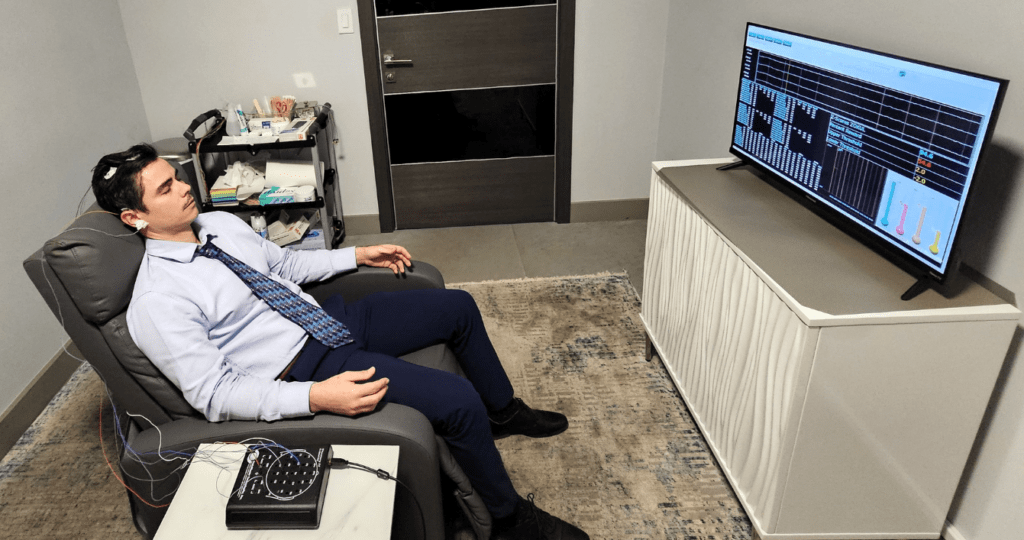
You will be seated comfortably while our clinician places a soft sensor cap on your head. The cap is fitted with electrodes that measure your brainwave activity with precision. There are no needles, no discomfort, and no electrical stimulation—the sensors are purely passive recording devices.
The recording is typically conducted in two states: with your eyes open and with your eyes closed. This allows us to assess how your brain transitions between active engagement and relaxed inactivity—a distinction that is clinically meaningful for many symptom patterns.
Following the recording session, your data is processed and analyzed by our clinical team. You will receive a detailed explanation of your results, including which areas of your brain showed notable patterns, what those patterns may be contributing to in terms of your symptoms, and how we recommend structuring your neurofeedback treatment plan in response.
The entire process is designed to be informative and empowering. Our goal is not simply to hand you a report—it is to help you genuinely understand your own brain and feel confident in the path forward.
Data-Driven Brain Health: The BPS Medical Difference
At BPS Medical, we believe that effective brain health care must be grounded in objective data. Too often, patients with neurological and mental health symptoms are offered generalized treatments that may or may not address what is actually happening in their unique brain. The result is slow progress, repeated trial and error, and a patient who feels increasingly frustrated and dismissed.
The qEEG brain map is our answer to that problem. It transforms the treatment process from guesswork into precision—ensuring that every neurofeedback session is targeted, purposeful, and informed by a clear picture of your brain’s functional landscape.
Combined with our clinical expertise and personalized care approach, the qEEG allows us to offer something genuinely different: brain health treatment that starts with understanding your brain—and builds everything else from there.
Medical Disclaimer
The information provided in this article is intended for general educational and informational purposes only. It does not constitute medical advice, diagnosis, or treatment, and should not be used as a substitute for professional medical evaluation by a qualified healthcare provider. Reading this content does not create a physician-patient, provider-patient, or any other clinical relationship between you and BPS Medical or any of its staff, practitioners, or affiliates.
If you have experienced a head injury, concussion, or any traumatic brain injury (TBI), or if you are experiencing neurological symptoms of any kind, please contact a licensed medical care provider promptly for a proper evaluation and individualized treatment plan. Every individual’s condition is unique, and only a qualified clinician who has evaluated you in person can provide recommendations appropriate for your specific situation.
If you are experiencing severe or rapidly worsening symptoms — including but not limited to loss of consciousness, repeated vomiting, seizures, slurred speech, extreme confusion, significant memory loss, severe headache, weakness or numbness in the limbs, or any symptoms you consider a medical emergency — call 9-1-1 or go to your nearest emergency room immediately.
Results, outcomes, and experiences with brain injury and neurofeedback therapy vary significantly from person to person. Any case examples, testimonials, or general outcome information referenced in our content reflect individual experiences and are not a guarantee or prediction of results for any other individual.
BPS Medical makes no representations or warranties, express or implied, regarding the completeness, accuracy, or applicability of any information contained herein. BPS Medical expressly disclaims any liability arising from reliance on this content in place of professional medical care. This content is subject to change without notice and should not be relied upon as current clinical guidance.
Ready to see what your brain map reveals? Book your qEEG assessment at BPS Medical today. No guesswork—just data, clarity, and a personalized plan built around your unique brain.
Medical Disclaimer
The information provided in this article is intended for general educational and informational purposes only. It does not constitute medical advice, diagnosis, or treatment, and should not be used as a substitute for professional medical evaluation by a qualified healthcare provider. Reading this content does not create a physician-patient, provider-patient, or any other clinical relationship between you and BPS Medical or any of its staff, practitioners, or affiliates.
If you have experienced a head injury, concussion, or any traumatic brain injury (TBI), or if you are experiencing neurological symptoms of any kind, please contact a licensed medical care provider promptly for a proper evaluation and individualized treatment plan. Every individual’s condition is unique, and only a qualified clinician who has evaluated you in person can provide recommendations appropriate for your specific situation.
If you are experiencing severe or rapidly worsening symptoms — including but not limited to loss of consciousness, repeated vomiting, seizures, slurred speech, extreme confusion, significant memory loss, severe headache, weakness or numbness in the limbs, or any symptoms you consider a medical emergency — call 9-1-1 or go to your nearest emergency room immediately.
Results, outcomes, and experiences with brain injury and neurofeedback therapy vary significantly from person to person. Any case examples, testimonials, or general outcome information referenced in our content reflect individual experiences and are not a guarantee or prediction of results for any other individual.
BPS Medical makes no representations or warranties, express or implied, regarding the completeness, accuracy, or applicability of any information contained herein. BPS Medical expressly disclaims any liability arising from reliance on this content in place of professional medical care. This content is subject to change without notice and should not be relied upon as current clinical guidance.